How to Turn Research Into Creative Work: A Guide for High School Students

5 minute read
You already know how to write the essay. Hit the rubric, cite the sources, land the thesis... and by now you can probably do it well. But somewhere in the middle of all that, a question has likely started nagging at you that no assignment ever asked. Something you actually want to know.
Some of the most striking work high school students produce never ends up as a paper at all. It ends up as a documentary film, a hand-drawn animation, a portfolio of paintings, a podcast, a website. The research behind it is real — archives, literature reviews, original interviews with people who have spent decades on the subject — but the final form is something the student had to invent. There is a name for this: research-creation, a process where inquiry and making shape each other as you go.
It is also one of the harder things to teach yourself, because there is no rubric for it. You have to design the question, find your way into a field you did not start out knowing, stay open to being surprised by what you find, and then decide what form your answer should take.
Below, Polygence mentor Chloe Zimmerman, an interdisciplinary artist, writer and professor at the Rhode Island School of Design and Massachusetts College of Art & Design, walks through how she guides students through exactly that process, and what her mentees have built along the way.
Hello! My name is Chloe. I’ve had the privilege of working with students as a Polygence mentor since 2023. I’m also an interdisciplinary artist, writer and professor at Rhode Island School of Design (RISD) and Massachusetts College of Art & Design (MassArt), and I previously taught at Brown University while completing my graduate degree there.
As an artist and writer, my work is often research-based. It has rooted me more deeply in my local communities and taken me to places as far-reaching as Berlin and Mexico for conversations with artists, activists, historians, scientists and land stewards. The work I make emerges through process, with creative output ranging from visual art and documentary film to writing and community oral history projects. I let questions, research and experience guide me, and a given creative project takes its form based on what my inquiry teaches me.
As a professor and arts educator, I love helping students figure out what questions they want to ask and what stories they want to tell. At the college level, I teach research studios, where I help students articulate what inspires them, develop guiding questions, design research processes, and shape creative work that shares their questions and perspectives with broader worlds.
At Polygence, I guide students through research-creation processes. Research can range from archival practices and literature reviews to original interviews, with students reaching out to people they’d like to speak with on a topic of their choice and building the skills and confidence to converse with them. Sometimes, a student conducts research and makes creative work in tandem, with me as their sole mentor. Other times, a student begins with a research phase working with another specialized mentor, and then works with me to create artwork, film or writing based on their research.
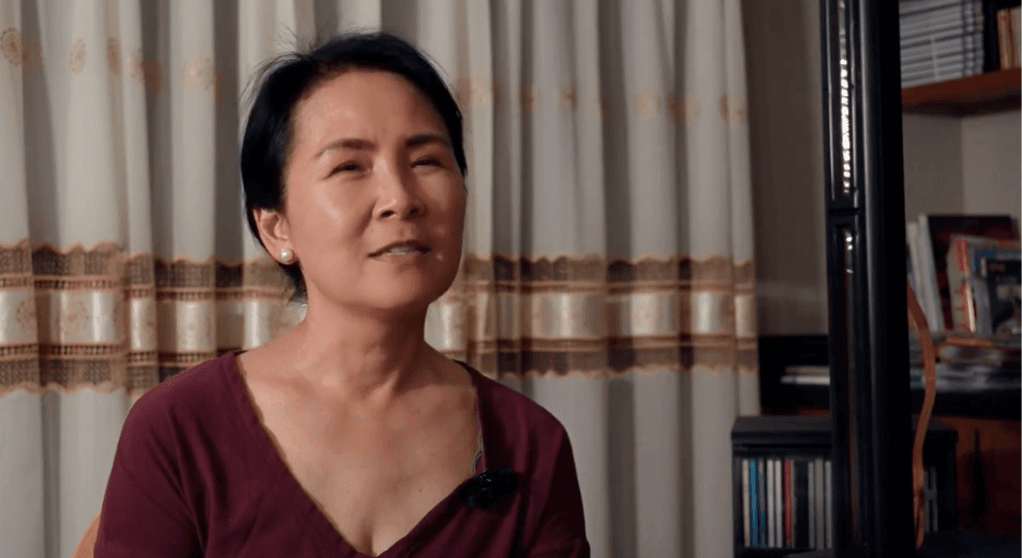
This secondary model is now available in a more formalized way through the Polygence Pathways program, which allows students to complete two core projects. For students with creative inclinations and aspirations, the Creative Arts Pathways program can support building foundational understanding or conducting research with a mentor in the discipline of their choice through an initial Core Project before working with me on a secondary Core Project. Our work together then allows them to synthesize and express their learning through a creative project in the medium of their choice (such as visual art, a short documentary film, a podcast, creative writing or a website).
Some examples of what my recent Polygence mentees have been up to include:
Researching cultural influences impacting women in STEM, preparing for and conducting documentary interviews, and creating a short film on the topic
Completing a research phase about the biology of anxiety with a science mentor; then working with me to create a hand-drawn animated video weaving together this scientific perspective with personal experience
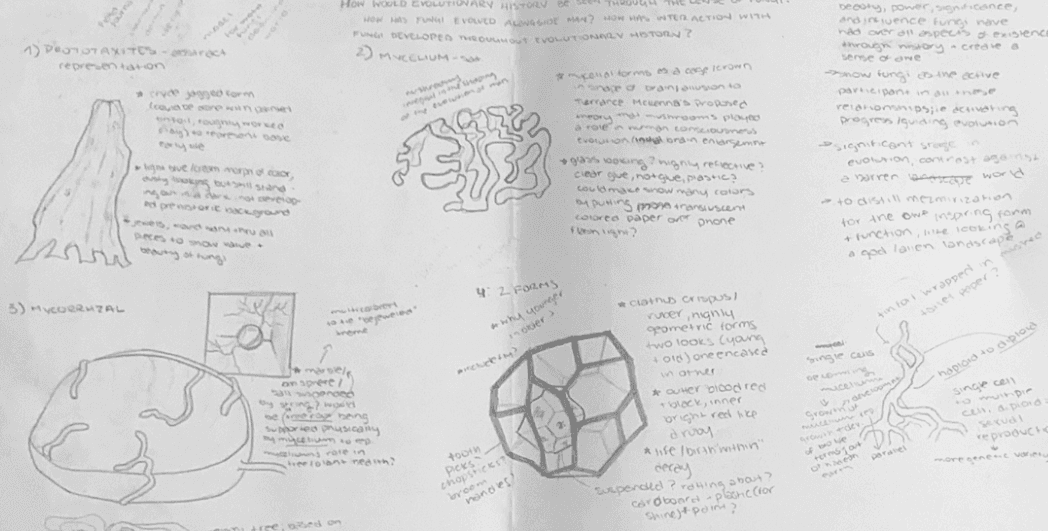
Learning about mushrooms, mycelium and ecology, conducting conceptual and materials-based research, and creating a cohesive portfolio of visual art (along with a written artist statement) inspired by what they learned
Polygence is so special because it offers a structured and rigorous space for students to articulate and follow their deepest curiosities. They get to decide what they care about, what they want to learn about, what they want to put into the world and how. It’s easy enough to fulfill the requirements of a rubric-based essay in school, but how do you conceive of and design your own questions, become familiar with multifaceted perspectives on a new topic, be open to surprise and discovery, and then craft creative work based on your learning about the world around you (and perhaps also yourself)? From my view within higher education, these are the skills students need to excel—both in college and in finding meaning and purpose in their life afterward.
I’m particularly interested in this intersection of self-guided inquiry and creative making. As noted by the Princeton Review, “artistic processes encourage experimentation and problem-solving, helping young people understand that knowledge can be constructed in multiple ways. By exploring diverse ideas and expressing their own viewpoints, teens develop a deeper awareness of themselves and the world, gaining insights that traditional academic approaches may not always provide.” Creative approaches also allow for subjectivity and feeling—holding this as an integral part of learning, knowing and questioning.
As I have witnessed at Polygence, the capacity to combine deep research with artistic making helps young people build skills including the capacity to question and reflect, convey and understand nuance and multiplicity, and open to other perspectives and the world around them with curiosity and confidence. It is truly a joy to support students in this journey.