


Maya Kumari
Class of 2030Gilroy, California
About
Hello! My name is Maya Kumari and my project is **Quantitative EEG Analysis of Brain Activity Before, During, and After Nadi Shodhana Pranayama**. I chose this project because I wanted to know what was happening inside my brain meaning, I was very curious and wanted to know more onto this study. After my project is complete, I would like to share my results with my family in India, professors with an interest in neuroscience, and the yoga community located in India, that believes yoga not as a religious practice, but a practice that provides one-self to balance ones life.Projects
- "Quantitative EEG Analysis of Brain Activity Before, During, and After Nadi Shodhana Pranayama" with mentor Sierra (Aug. 3, 2026)
Project Portfolio
Quantitative EEG Analysis of Brain Activity Before, During, and After Nadi Shodhana Pranayama
Started Oct. 27, 2025
Abstract or project description
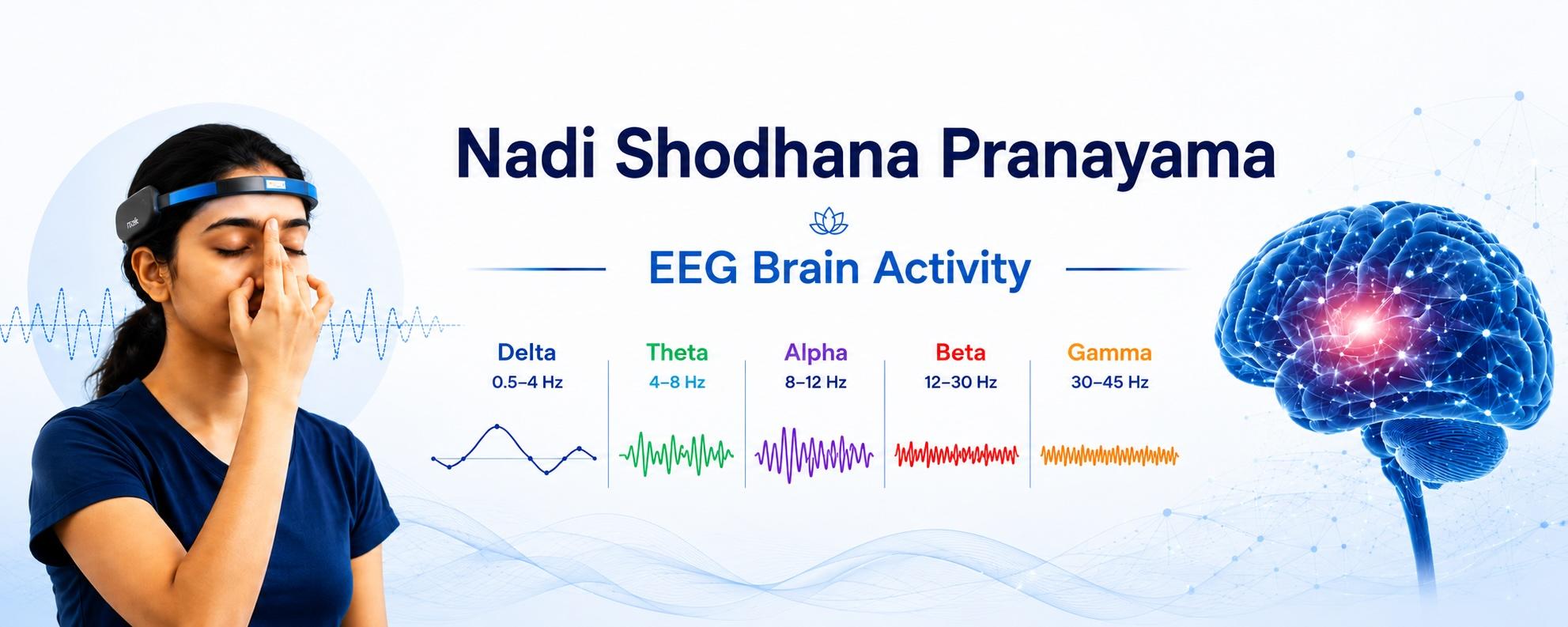
Nadi Shodhana Pranayama, or alternate nostril breathing, is a yogic breathing technique believed to regulate the autonomic nervous system and improve attention. While previous studies have examined its neurophysiological effects, many rely on long-term interventions or do not include regional brain comparisons and effect-size analysis. This study evaluated the effects of a single Nadi Shodhana session on EEG brain-wave activity by analyzing Delta (0.5–4 Hz), Theta (4–8 Hz), Alpha (8–12 Hz), Beta (12–30 Hz), and Gamma (30–45 Hz) frequency bands. EEG data were collected from twelve participants (ten analyzed after signal-quality exclusions) using a wearable Muse-S headband before, during, and after practice. A custom Python pipeline using Welch power spectral density analysis quantified changes in relative band power. Results showed increased Theta and Delta activity during practice, accompanied by significant decreases in Beta and Gamma activity. Alpha power increased from 23.2% at baseline to 25.9% after practice (Cohen's d = 0.82). Despite individual variability, regional analyses demonstrated a consistent shift toward a relaxed yet attentive brain state, supporting wearable EEG as a practical tool for quantifying the neurophysiological effects of yogic breathing.